
USDB Military Release Paths
The United States Disciplinary Barracks is operated by U.S. Army Corrections Command. Leavenworth County's Sequential Intercept Mapping report describes it as the Department of Defense maximum-security facility for long-term, post-sentence military confinement. That role separates USDB from the nearby Midwest Joint Regional Correctional Facility, which serves a different pretrial and shorter posttrial mission.
“Released from USDB” is not one fixed outcome. The person may transfer to MWJRCF, another military facility, enter parole or mandatory supervised release, receive relief through appellate or clemency action, or complete the sentence. A transfer means military custody continued. A community placement under supervision is not the same as final discharge. Use the Army's own status and terms from the record.
| Possible USDB exit | How to describe it |
|---|---|
| Another military institution | Transfer within military custody |
| Military parole | Release from confinement under military supervision |
| Mandatory supervised release | Community phase subject to military terms |
| Sentence completion | Completion only when the Army record supports it |
| Appellate or clemency action | Use the exact action and effective status in the official record |
Confirm USDB Release Records
The U.S. Army Corrections Command page is the custodian starting point. It identifies the military system responsible for USDB. Do not begin with the Leavenworth County sheriff roster, KASPER, or the ordinary BOP locator. A blank result in any of those civilian systems says nothing reliable about military confinement.
- Confirm that the person was held at USDB rather than MWJRCF or another Leavenworth facility.
- Contact the facility or Army Corrections Command for the proper status and records channel.
- Ask for a specific existing release, transfer, parole, supervised-release, or sentence-completion record.
- Use the Fort Leavenworth FOIA office when the record is available through the federal public-record process.
- Read the response for destination and status. Do not turn a transfer into a community release.
- Use military case, appellate, or clemency material when it supplies the governing action.
The Leavenworth County release search helps identify the other local custodians, but the USDB result must come from Army channels.
Army USDB Custodian
The official Army Corrections Command source below establishes the responsible system. It is more than a general federal link. The distinction matters because “federal” can refer to BOP civilian prison custody, ICE immigration detention, U.S. Marshals custody, or military confinement, each with a different record route.
The Army Corrections Command page provides the official starting point for USDB and MWJRCF questions.
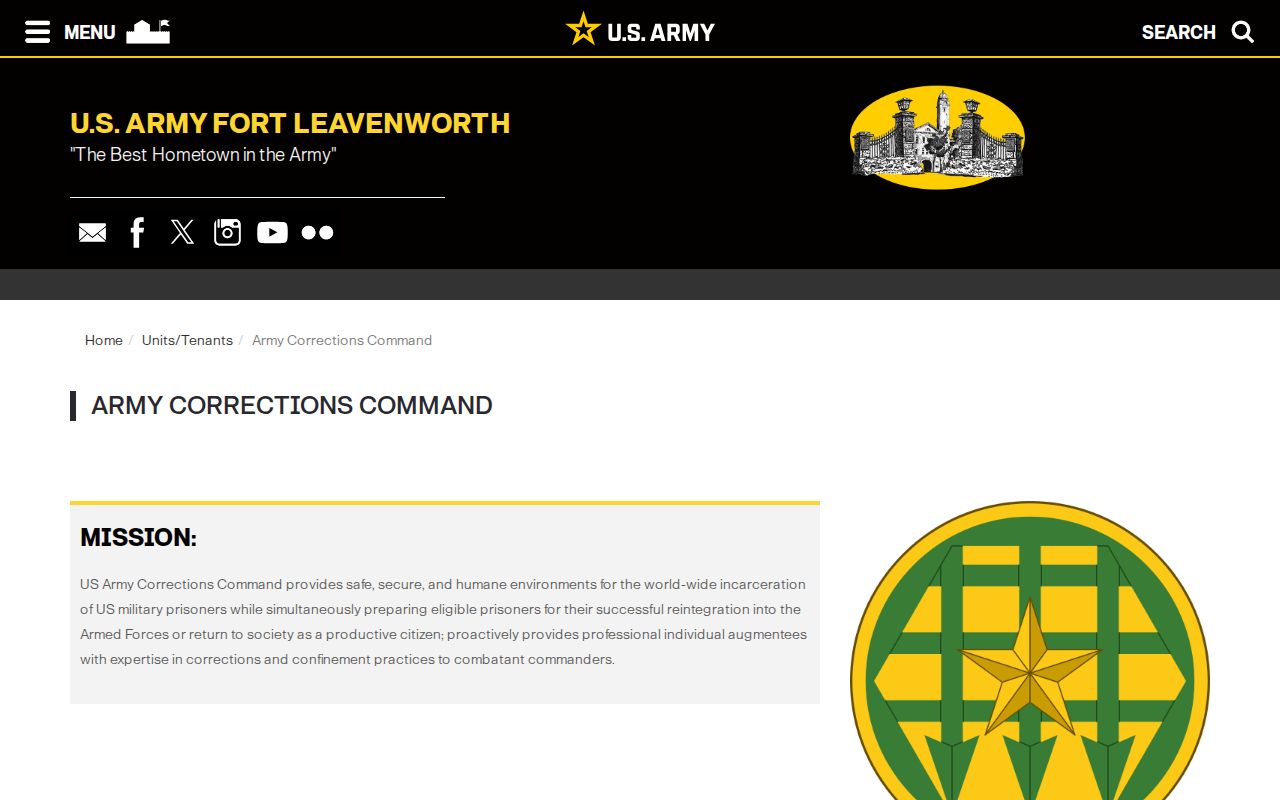
The source confirms custody ownership. It is not a public roster, so a specific record may require direct contact or a formal request.
- Military confinement
- Custody under the armed forces correctional system rather than civilian state or federal prison systems.
- Clemency
- An authorized reduction or change in a military sentence; it does not always mean immediate release.
- Military parole
- Conditional release from confinement under military supervision.
- Transfer
- A move to another institution while legal custody continues.
Request USDB Release Documents
When an existing releasable document is needed, the Fort Leavenworth Freedom of Information Act office is the formal fallback. A focused request should identify the person and, when known, service information, confinement period, case reference, or prisoner identifier. Specify the record sought, such as the release or transfer entry, parole or mandatory-supervision action, or document showing sentence completion.
A public-record request should seek records that already exist. It should not ask staff to create a narrative or decide what happened without a record. Some information can be withheld or redacted under federal law. The response may also route the requester to a different military custodian. Follow that referral, since geography alone does not make Fort Leavenworth the owner of every military case file.
The Fort Leavenworth FOIA route is captured below.
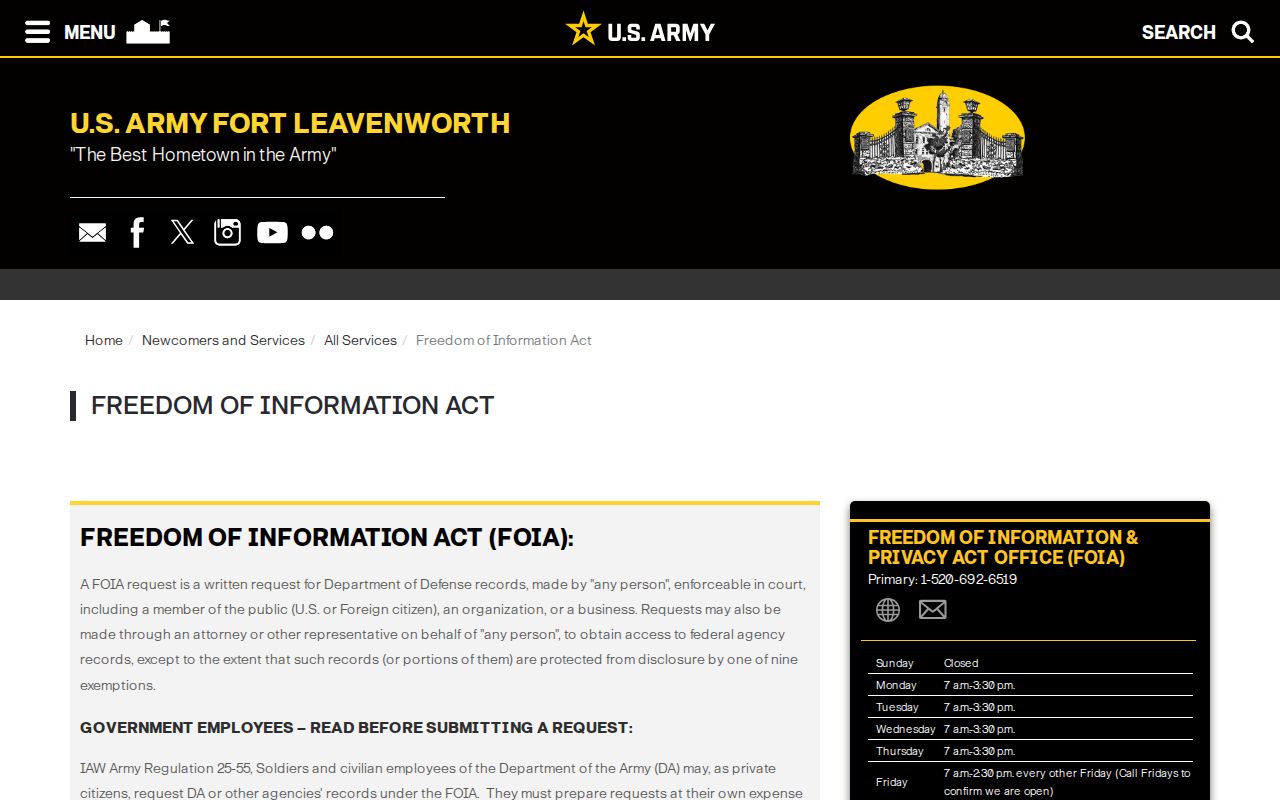
The FOIA page is the documentary fallback, while an urgent current-status question should start with the military custodian.
USDB Records Contact Route
Army Corrections Command and the USDB facility are the appropriate contacts for military custody routing. The research did not provide a verified public USDB street-address and telephone set for publication, so no number should be invented from an old directory. Use the current Army page and its official contact routes before making a request or planning a visit.
United States Disciplinary BarracksFort Leavenworth, Kansas
U.S. Army Corrections Command
Status route: facility or Army Corrections Command
Record route: Fort Leavenworth FOIA as applicable
A county sheriff cannot certify a military release it did not control. The same principle works in reverse: Army Corrections Command is not the custodian for a Leavenworth County Jail booking.
USDB History and Function
The county's 2024 Sequential Intercept Mapping report described a 515-person USDB figure. It is a dated local planning snapshot, not a current population count or guaranteed present capacity. Its key value is functional: the report distinguishes long-term, post-sentence military confinement at USDB from the roles of the county jail, Lansing state prison, FCI Leavenworth, and MWJRCF.
That local history makes record labels vital. A person can be geographically “in Leavenworth” without appearing in any local civilian booking system. Search failure in the wrong system is expected and cannot support a release claim.
Leavenworth Military Custody Differences
Leavenworth County contains two distinct Army correctional institutions. USDB is the maximum-security, long-term post-sentence facility. MWJRCF is described as a Level II facility for military pretrial and shorter posttrial custody. A move between them can close one facility episode without ending Army custody.
Other nearby institutions add more ambiguity. FCI Leavenworth uses BOP records. Lansing uses KDOC and KASPER. The county jail uses sheriff records and VINE. MRRC uses ICE channels as of July 2026. Identify the operator first, then ask what the exit meant under that operator's record.
Note: “No longer at USDB” is safest until an Army record distinguishes transfer, supervised release, parole, or sentence completion.
Read USDB Release Evidence
A military case action and a physical prison exit may occur at different times. An appellate ruling, clemency approval, parole action, or sentence calculation can authorize a new status before staff complete transfer or release processing. Preserve both dates when the records provide them. Do not substitute the order date for the actual custody-change date without support.
Identity matching also matters. Use a lawful military identifier or case reference when available, and provide an approximate USDB confinement period in a record request. A name alone can lead to the wrong person or wrong Fort Leavenworth institution. When a response uses a military status term, retain that term and define it briefly instead of replacing it with a civilian label.
For a current question, direct contact can be more timely than a released document. For a lasting citation, request the existing record. Together, those channels distinguish present status from the formal record of how it changed.
USDB Supervision Is Separate
Release from confinement and the end of military supervision are separate events. A record showing parole or mandatory supervised release supports a statement that the person left prison under the named terms. It does not support final discharge unless the Army also records that later endpoint. State the effective date, status, and source.
A new civilian custody episode can follow a USDB exit. A county, state, BOP, or ICE agency creates its own record under its own identifiers. Army Corrections Command remains the source for the USDB departure, while the receiving agency controls what happened next. No locator merges all those episodes.
When documents conflict, compare creation dates, effective dates, and purpose. A case order may authorize an action; a facility record can show physical movement; a supervision record can show the continuing community phase. Ask the custodian to explain an unclear field rather than supplying a civilian synonym. Military appellate and clemency procedures differ from Kansas sentencing, so KASPER labels should not be imported into an Army record.
Search Public Records
Sponsored Results